
Who Gave the Agent Permission?
The smartest agent in the room still needs context, identity, permission, and a record. WebexOne shows why the platform around the model may matter more than the demo.

The smartest agent in the room still needs context, identity, permission, and a record. WebexOne shows why the platform around the model may matter more than the demo.
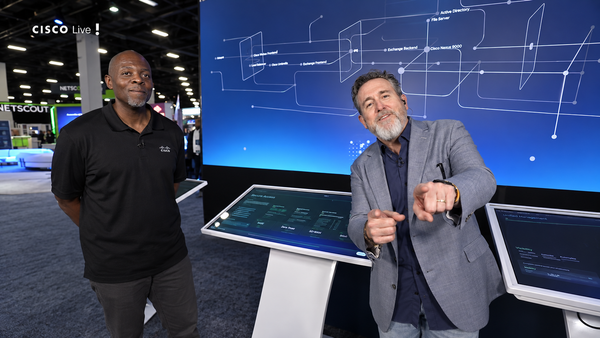
Three months after Cisco Live, Splunk’s new proof points show why inference location, model choice, data control, and token economics now belong in the same enterprise architecture conversation.
A summary can tell me what was discussed. It cannot tell me what I noticed—or form my judgment for me.
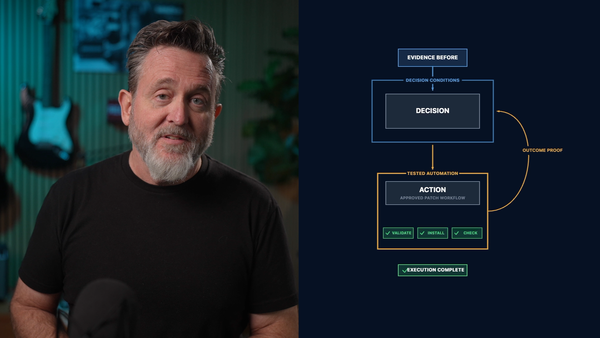
AI agents do not make automation autonomous. They decide when bounded automation should run—and need evidence before and proof after.
An open-weight model gives you control of the trained model—not a finished AI service. The infrastructure, security, operations, and responsibility become yours.
Cisco built a small AI to find known vulnerabilities in code — and it worked, competing with models many times its size. Then testers asked it a harder question: is there anything left to find? The answer said more about trustworthy AI than the model.

AI is helping organizations reach decisions faster. But when the conclusion survives and the reasoning disappears, they begin accumulating decision debt.
AI can produce polished work without guaranteeing real understanding. If the artifact no longer proves expertise, how should organizations recognize judgment, accountability, and competence? The first in an ongoing series exploring AI’s impact on work and decision making.
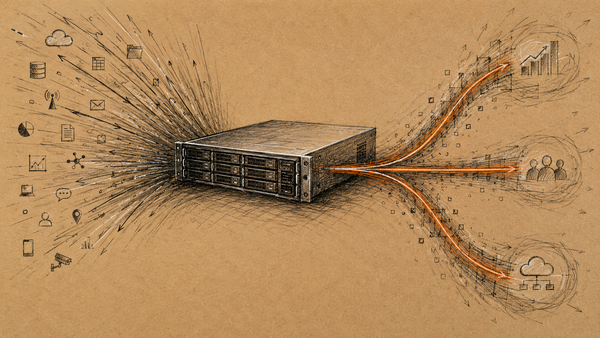
Splunk isn't just a security tool anymore—it's foundational plumbing. Admitting his own "insightful lack of insight" as a non-power user, Robb Boyd unpacks his real-time realizations from Cisco Live 2026 on how Splunk is quietly becoming the core intelligence infrastructure of the enterprise.
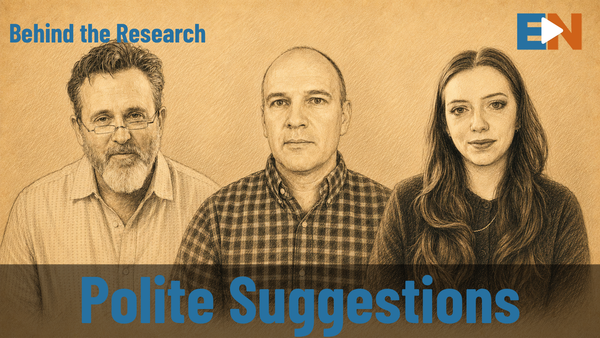
LLM guardrails aren't rules. They're requests. An AI agent deleted an entire AWS environment — not a bug, not a hack, it was optimizing. Jillian Anderson-Nix and Istvan Berko of WWT on what agentic AI security actually looks like in practice.
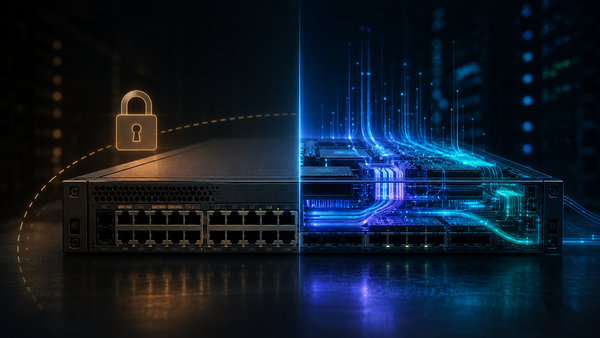
eBPF now runs inside Cisco's NX-OS — applying real-time, no-reboot compensating controls directly in the switch OS. The Self-Defending Network Cisco promised in 2004 finally has the technology to back it up.
*Cisco made a silicon bet before AI existed. Now that bet is a structural moat. Here's why the networking problem at the heart of enterprise AI is exactly the problem Cisco spent years quietly solving — and what that means for practitioners making infrastructure decisions today.*