The Guy With the Gaming Headset

I want to tell you about a moment of almost-bias.
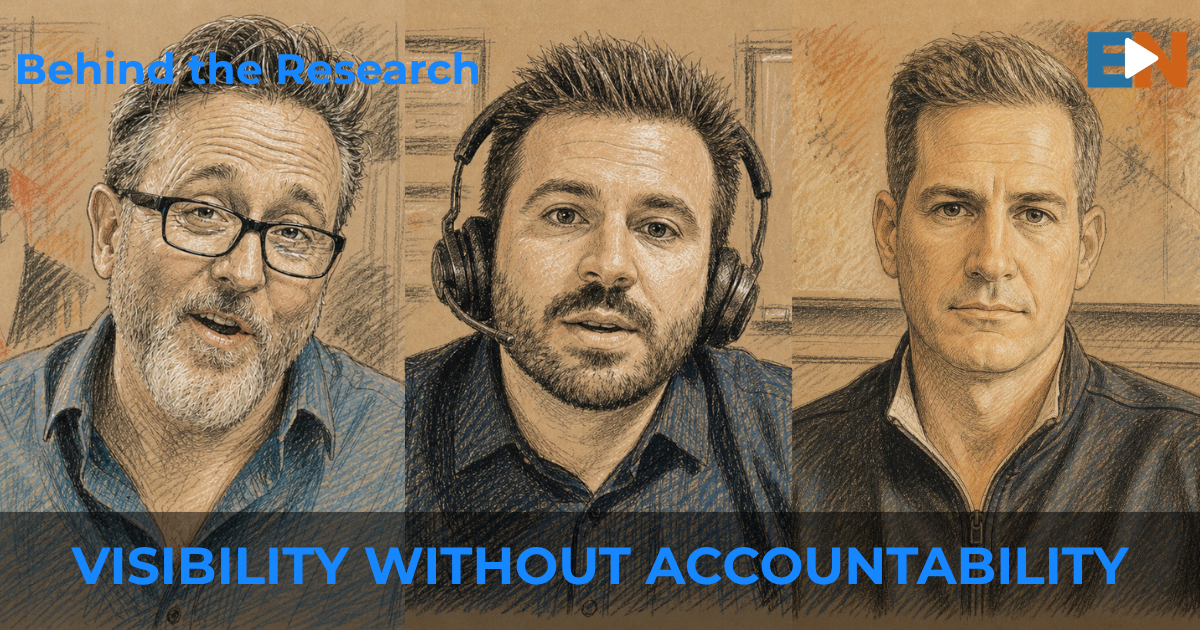
Darryl Monroe joined our recording session quiet. Gaming headset on. Newer face to me — first time we'd worked together. Next to him was Jack French, AVP of Cloud Practice at WWT, seven years with the company, easy executive presence, the kind of guy who fills a room without trying. I'd worked with Jack before. I knew what I was getting.
I thought I knew where the gold was going to come from.
I was wrong.
Speak Softly
Six of the seven pull quotes I cut from this episode came from Darryl.
Not because Jack wasn't sharp — he was. But Darryl had done something that takes most people years to figure out. He'd compressed everything he knew into the smallest possible container. No windup. No hedging. Just the thing itself.
"The cost is actually a symptom."
"You can't optimize what nobody owns."
"Visibility without accountability is just reporting."
"They're not actually moving faster. They're just deferring the cost of the decision."
Each one lands like a verdict. No analogy required. No setup needed. The sentence does all the work because somewhere in his years of customer-facing presales work — walking into organizations convinced they have a FinOps problem when they actually have an accountability problem — he'd distilled the diagnosis down to its irreducible core.
That kind of compression is earned. You don't get "visibility without accountability is just reporting" on your first day. You get it after the fiftieth organization that had beautiful dashboards and a bill that never moved.
The Golf Cart That Didn't Make It
Early in the recording, I pitched an analogy I'd been working on.
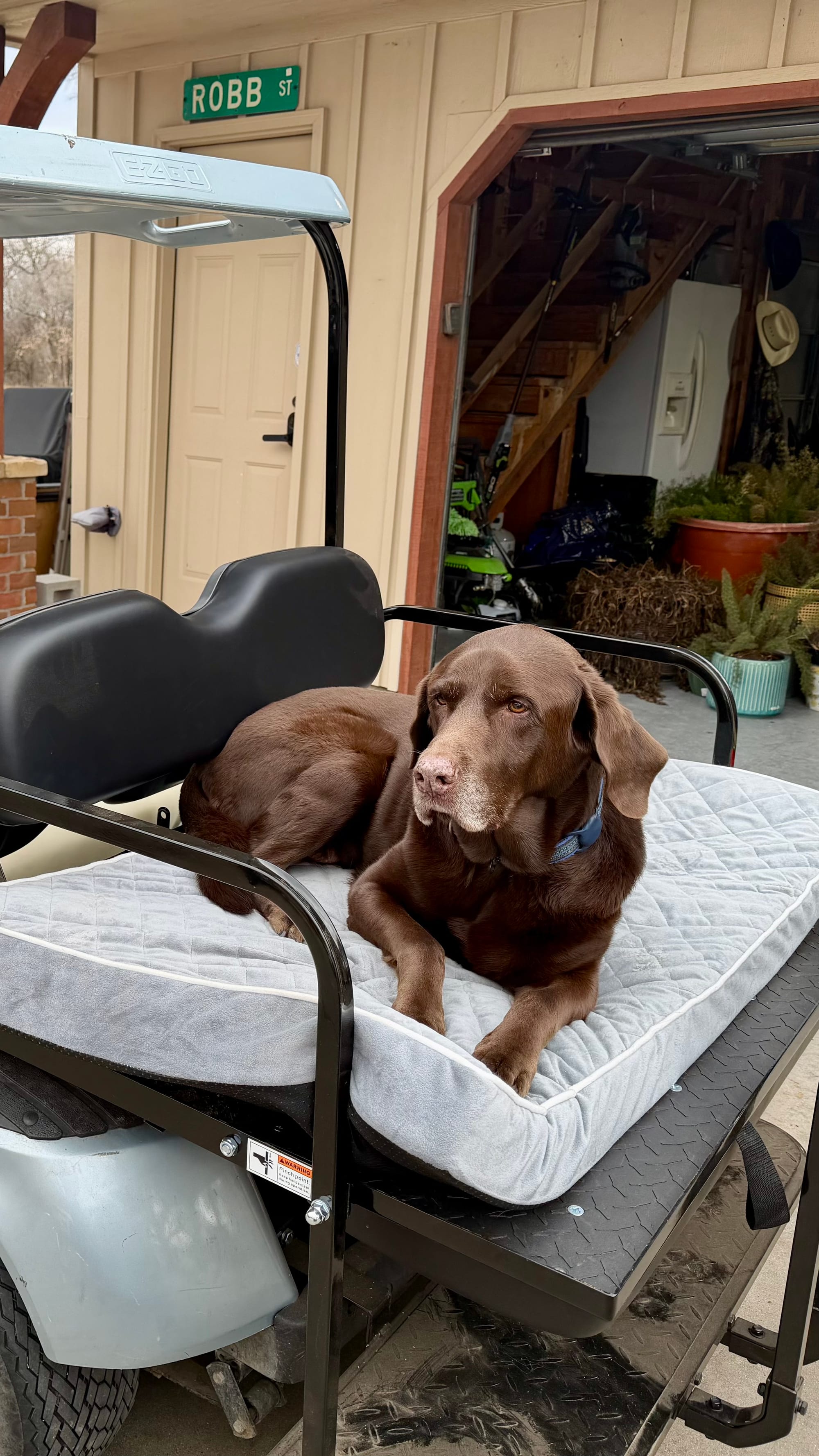
I have a little land outside of Joshua, Texas. I putt around on a golf cart with my chocolate lab Gerard, who has a habit of following me from the front — sprinting out ahead of the tires while I'm trying to drive. It reminded me of the dynamic between engineering teams chasing AI spend and finance teams trying to steer using last month's TBM report. Engineering is the dog. Finance is the driver. Nobody can see where they're going.
I pitched it. I wasn't fully sold on it myself, honestly. Something about it wasn't sitting right.
Jack heard it and didn't take the bait. He took the useful part — the driver, the visibility direction — dropped the dog entirely, and gave me back something cleaner. His version became the rear-view mirror line that made it into the final cut: "I am looking in the rear-view mirror every month to see what did I just spend?" And then later: "Now I'm able to actually look out the front windshield."
His metaphor. Built partly from mine. Better than mine.
What I felt in that moment wasn't competitive. It was relief. I was working with a guest who wasn't going to let me run amok with his stories. He knew what he knew, and he was going to protect it. I've worked with guests who would have just accepted the golf cart and run with it. Those are the ones who end up saying something slightly off — a frame that doesn't quite fit their world — and you feel it in the edit later.
Jack didn't do that. He redirected. And the episode is better for it.
Two Guests, One Format
What strikes me looking back is that Jack and Darryl needed completely different things from me — and the format had to serve both.
Jack thinks in stories and pictures. He reaches for metaphors naturally, builds context before landing a point, earns his conclusions through accumulated evidence. What he needed was something to push against. The golf cart gave him that. His better version of it came from the reaction, not from me handing him the answer.
Darryl thinks in compression. He'd already done the distillation work before he sat down. The verdicts were ready. What he needed wasn't a frame — it was a runway. A question clear enough that he could just say the thing he already knew how to say, and a host disciplined enough to get out of the way afterward.
Same recording session. Same format. Completely different function.
That's the part that doesn't show up in the finished video. The prep work — the discovery call, the script, the host positioning going into the room — isn't about making guests sound like me. It's about figuring out which kind of communicator is sitting across from you and creating the right conditions for each of them. Give the storyteller something to react to. Give the compressor a clean runway. Don't confuse which one needs which.
And don't assume the guy in the gaming headset is the quiet one.
Watch the full conversation with Jack French and Darryl Monroe on the WWT Research platform. The Cloud Priorities for 2026 research paper covers Priority 3 in full — the convergence of FinOps and TBM, the accountability frameworks that actually move the number, and the realistic timeline for building the organizational muscle to make it stick.
This is part of the work I do with World Wide Technology's research team. More at explainerds.net.
Robb Boyd spent nearly two decades at Cisco as Managing Editor of TechWiseTV — the company's highest-ROI marketing asset, reaching audiences in 65+ countries. Today he helps technology companies close the gap between their engineers and everyone else: customers, executives, and the broader audiences that actually move markets. If your technical experts have something important to say but struggle to say it in a way that lands, that's the problem Robb solves — through hosted video series, guided narrative content, and on-camera work that makes complex ideas clear without making them simple.
Want more analysis like this? Subscribe to ExplaiNerds. And if you're a marketing or content leader with a story that deserves a bigger audience — let's talk.