
Beyond the Sovereignty Soundbite
European tech leaders just pushed back on their own continent's sovereignty agenda. SAP's CEO put it bluntly: you can't mandate digital independence without the technological capability to back it up. That gap between policy ambition and technical reality? It's the story.

Something unexpected just happened in the digital sovereignty debate. European tech leaders - the very people who should benefit from Europe's push for technological independence - are telling their own policymakers to hit the brakes. SAP CEO Christian Klein put it bluntly in a recent Computerworld piece: sovereignty mandates are meaningless without the underlying technological capability to execute them.
This is isn't capitulation. It's a reality check. The sovereignty conversation has gotten ahead of both capability and clear thinking.
The Vocabulary Mess
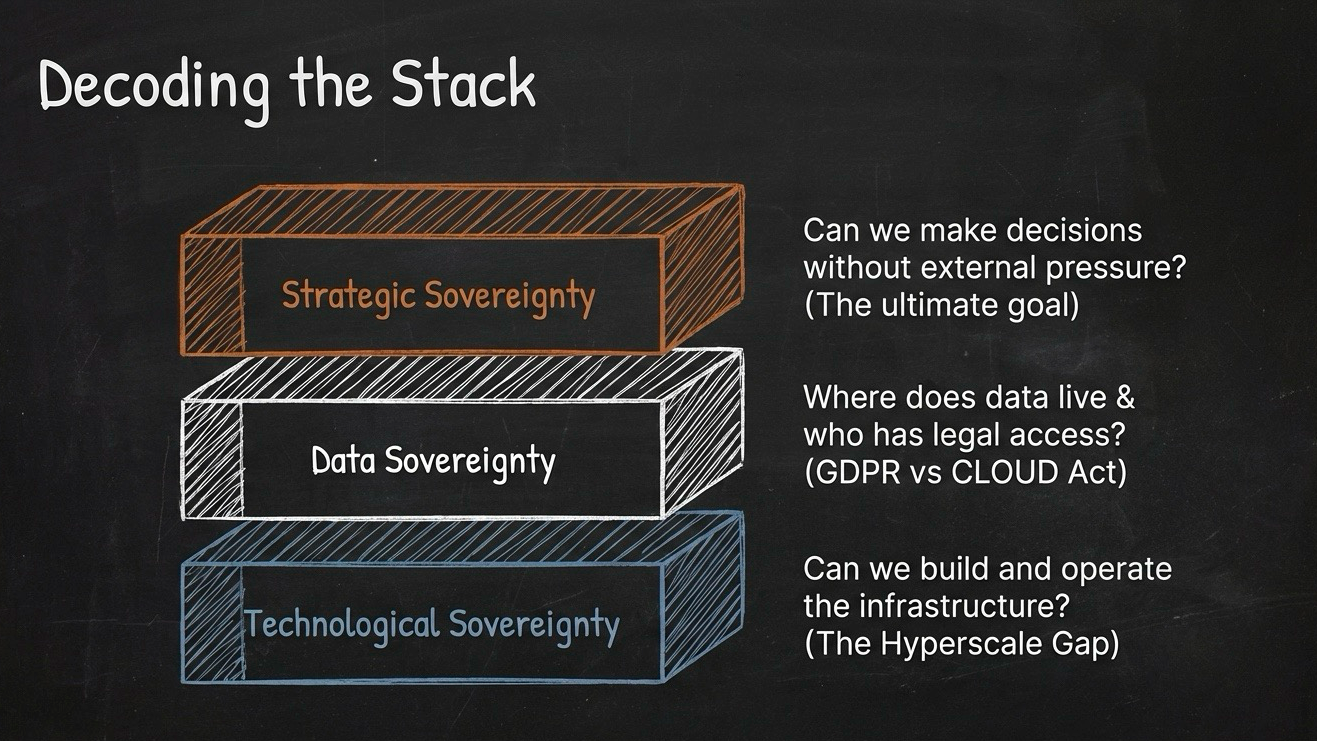
We're using one word - sovereignty - to describe three distinct concepts, and it's causing real confusion.
- Data sovereignty is about where information lives and who has legal access. The U.S. CLOUD Act concern is real - your data might sit in a European data center, but the American provider can still be compelled to hand it over.
- Technological sovereignty asks a different question: can you actually buid and operate the infrastructure yourself? Europe's strong in enterprise software and telecom, but hyperscale cloud?That's a gap.
- Strategic sovereignty operates at another level entirely - the freedom to make indepdent decisions without external pressure, regardless of who built the infrastructure.
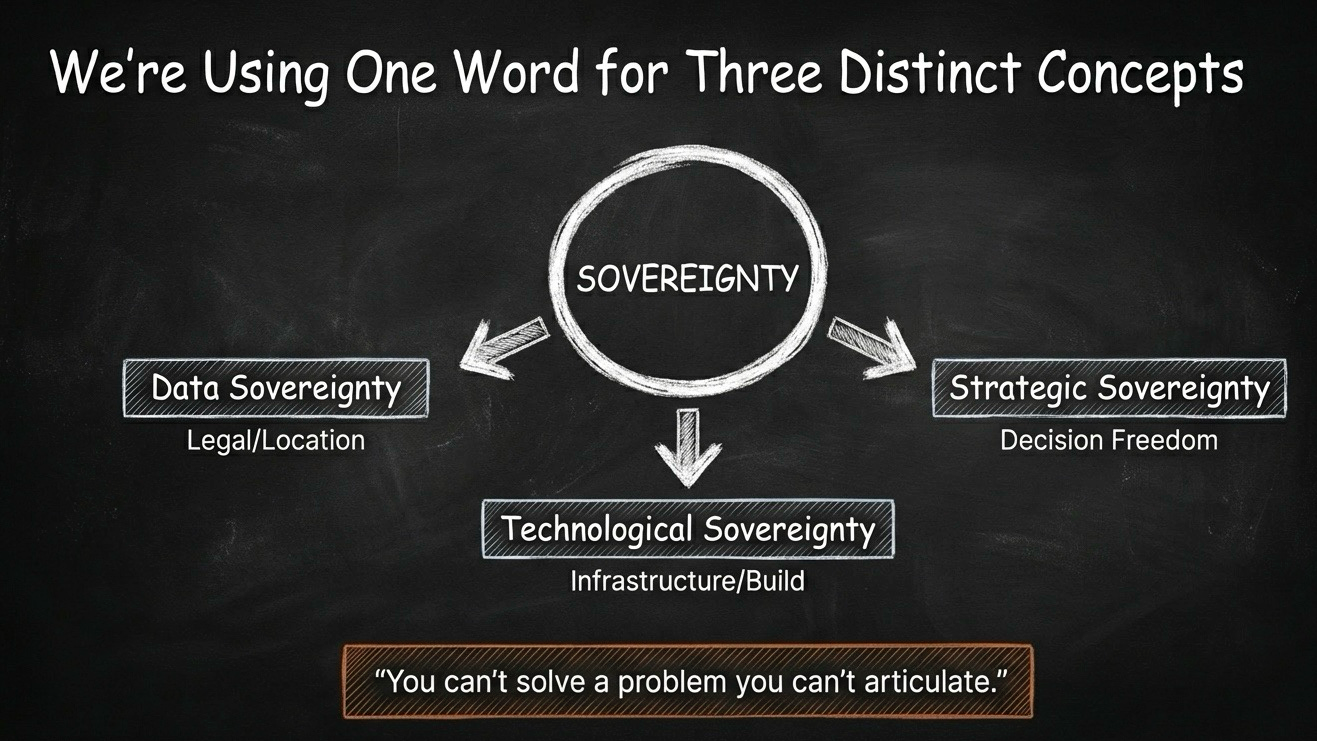
When regulators say "sovereignty," they mean layer one (data), Engineers? Layer 2 (technological). CEO's worry about layer three, (strategic). Everyone nods in meetings. Nobody's aligned.You can't solve a problem that you can't articulate precisely.
The Capability-Policy Gap
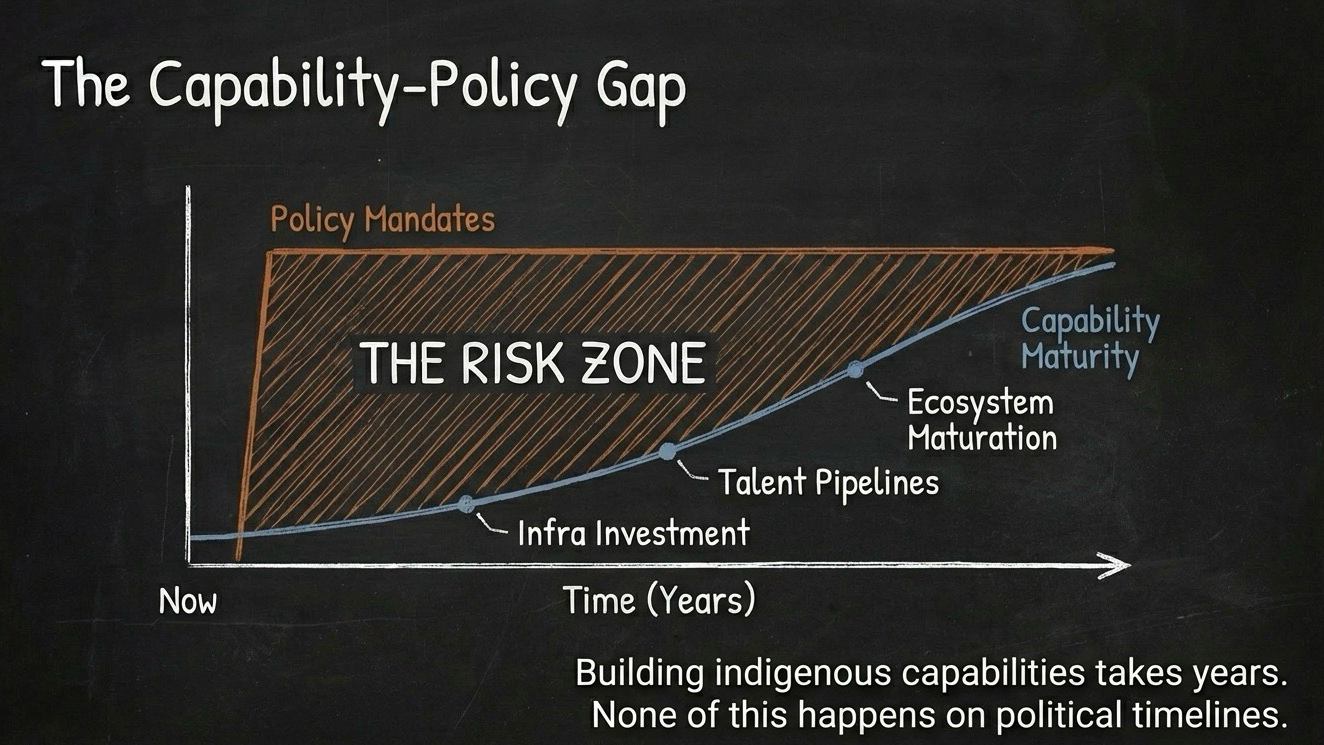
Building indigenous capabilities takes years, not months. Infrastructure investment, talent pipelines, ecosystem maturation - none of this happens on political timelines.
Mandate European-only solutions before providers can deliver competitive alternatives, and you haven't strengthened anything. You've created compliance theatre that weakens your position. Companies struggle with inferior tools or find creative workarounds that make the regulation meaningless.
Some vendors are building purpose-built sovereign infrastructure for specific use-cases - air gapped systems designed for the most sensitive workloads. Specialized solutions for specialized needs. But that level of architectural commitment proves you can't blanket-mandate sovereignty across all workloads overnight. It doesn't work that way.
Not all workloads carry the same risk. Critical infrastructure and sensitive data need robust sovereign solutions. But general business workloads? Force everything into sovereign infrastructure and you either create massive inefficiency or dilute protection for what actually matters.
I've written before about how cloud security intersects with geopolitical reality. The framework still holds: different workloads require different approaches based on actual risk profiles, not political optics. The challenge is building governance that starts with education, not compliance tools - understanding what framework you're implementing before you implement it.
The Communication Problem
How do you publicly articulate a phased, hybrid approach without looking like your caving to pressure?
"We're going 100% sovereign" sounds strong and plays well politically. "We're implementing a risk-tiered approach over 5-7 years with different solutions for different workload sensitivities" s smarter strategy, but it sounds like hedging gibberish.
Language that frames thoughtful, phased approaches as mature risk management rather than compromises does not exist yet. Organizations need to be honest about current dependencies, explicit about which workloads truly require sovereign infrastructure, and clear about why different approaches serve different needs.
I've watched this payout in SASE deployments, where vendors shifted from a "our way or the highway" to "we'll meet you where you are" specifically because the market refused single-vendor lock-in. The sovereignty conversation needs the same pragmatic flexibility...acknowledging that hybrid approaches aren't weakness, they are strategic positioning based on actual capabilities and timelines.
Without the framework, you're stuck with an impossible choice: oversell your sovereignty (creating false confidence and potential security gaps) or undersell your progress (creating alarm and poetical pressure for rushed mandates).
Wait. Let me revise that. There's a third option companies are already using...they say nothing publicly and just quietly build hybrid architectures while nodding along to sovereignty rhetoric. That might be the smartest play short-term, but it's terrible for the broader policy conversation Europe needs to have.
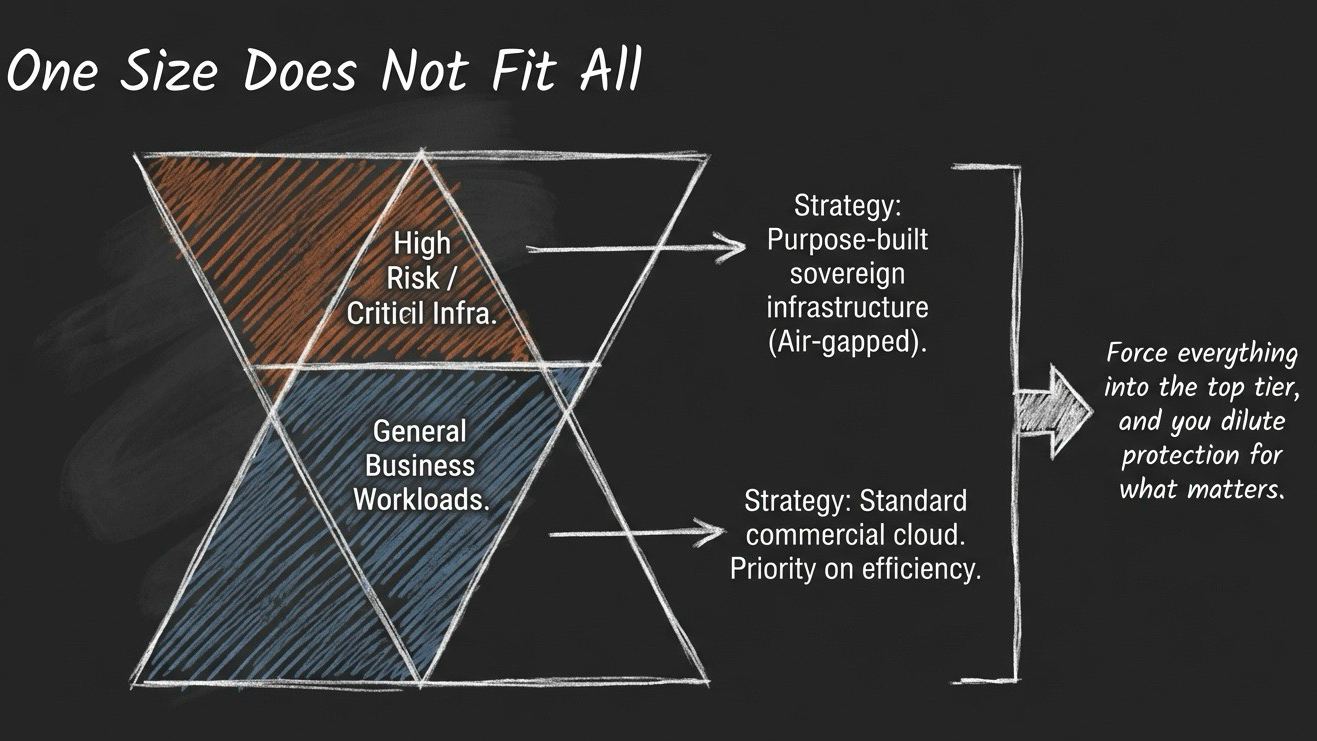
The over-regulation risk isn't theoretical. Binary sovereign-vs-non-sovereign mandates, compliance timelines that ignore technical complexity, requirements that create competitive disadvantage without improving security - these could trigger exactly the vulnerabilities they're meant to prevent. Fragmented systems, security gaps, operational chaos.
What Happens Next
European tech leaders are not backing away from sovereignty. Their injecting realism into a conversation that's gotten abstract and potentially dangerous.
Build capability. Reduce strategic dependencies. Protect what matters. BUT DO IT with clear thinking about what sovereignty actuallly means, honest assessment of current capabilities, and patience to build rather than just mandate.
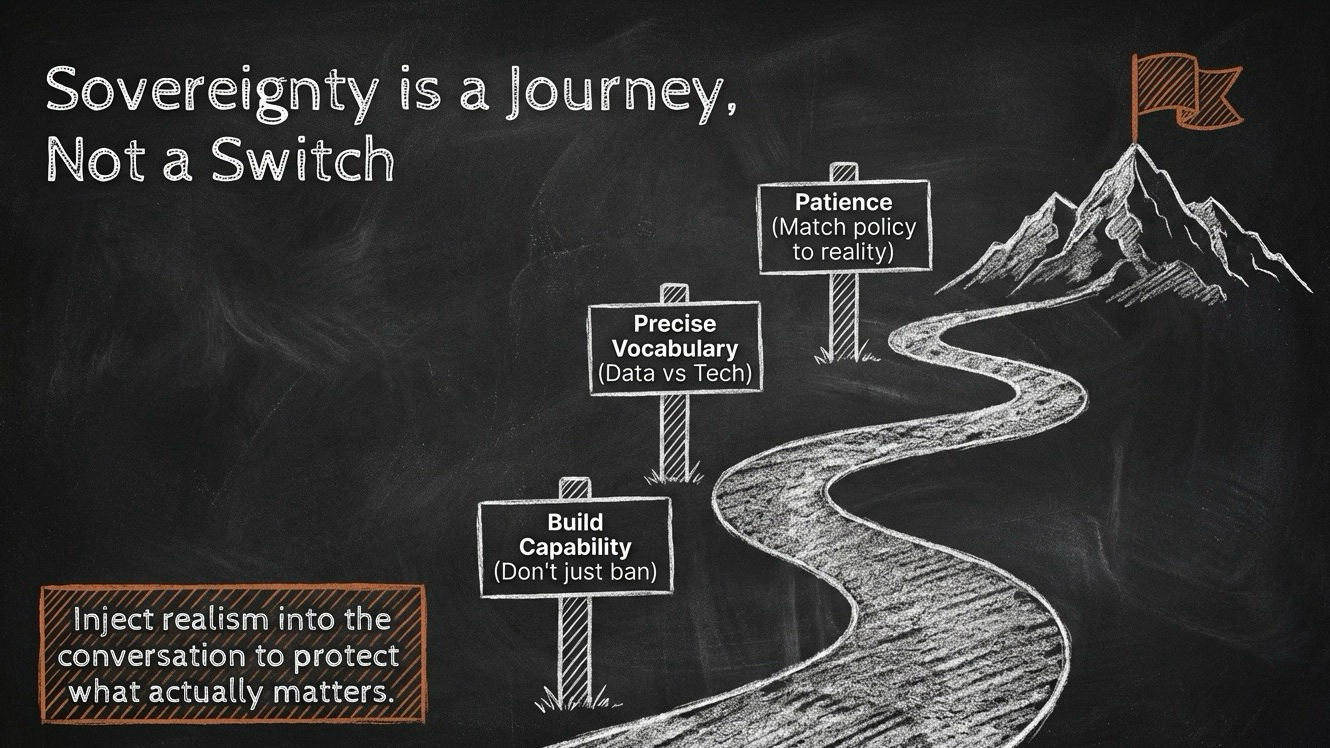
Sovereignty isn't a light switch you flip. It's a journey requiring precise vocabulary, realistic timelines, and discipline to match policy with capability. Whether policy makers understand that before rushing into regulations that sound decisive but create chaos? We're about to find out.
Thanks for reading!
Robb
P.S. - Digital sovereignty discussions have always carried emotional weight - they're about national security, economic independence, and cultural autonomy all at once. But these conversations are happening now against a backdrop of unprecedented U.S. policy volatility. Whether you see current regulatory rollbacks as overdue corrections or dangerous abandonment of guardrails, the uncertainty itself changes how other nations calculate their infrastructure dependencies. I've tried to focus this piece on the strategic substance beyond the political noise, but I'd be dishonest if I didn't acknowledge that the ground is shifting beneath our feet as we speak.