Behind the Research: The Chicken-and-Egg Crisis
20 minutes into the recording, Doug Wong dropped a truth bomb: "I can’t turn on a VM without the network, and I can’t get the network up without the VM." It’s the ultimate paradox. We’ve virtualized everything for efficiency, but we’ve locked the keys to the burning room inside the room.

This is Priority 4 in World Wide Technology's Data Center Priorities series: Cyber Resilience
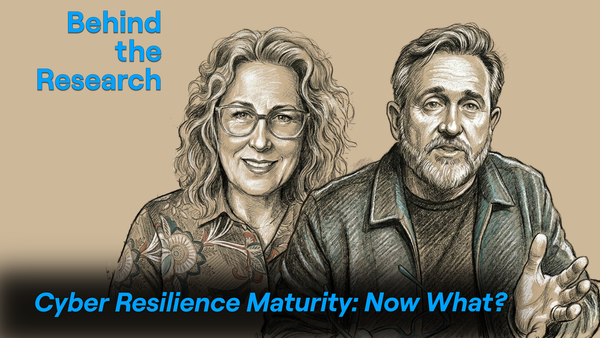
We were about 20 minutes into the recording when Doug Wong said something that made me stop the teleprompter. We were supposed to be talking about air-gapped vaults and immutable backups—the standard "Priority Four" checklist items for cyber recovery. But Doug, a Technical Solution Architect at WWT, wasn't interested in the storage targets. He was worried about the "Chicken and the Egg."
"I can’t turn on a VM if I don’t have the network," he told me, "and I can’t get the network up without the VM."
That one sentence exposed the house of cards we’ve spent 20 years building.
The Efficiency Trap
We’ve spent two decades virtualizing everything for the sake of efficiency. We put our network controllers on VMs, our firewalls on VMs, and our identity management on VMs. It’s a masterpiece of engineering—until a ransomware actor forces you to unplug the whole thing.
In a traditional Disaster Recovery (DR) scenario, your secondary site is "warm." You just swing the traffic over. But a cyber recovery is ground zero. If you have to "cut the lines" to stop an infection—which is a standard response—you lose the very pathways you need to reach your recovery tools.
Doug’s point was simple but devastating: If the keys to the room are locked inside the room, and the room is on fire, your 500-page runbook is just expensive kindling.
The "Same Three People" (STP) Principle
I asked Doug why this doesn't come up in tabletop exercises. His answer? The STP Principle. Every organization has the "Same Three People" who hold the entire environment's map in their heads. During a relaxed drill, they fill in the gaps. But in a real-time attack, when the stress is hitting 11 and the network is dark, that unwritten knowledge vanishes.
It’s not just a technical failure; it’s a documentation failure. We’ve become so good at siloed management that we’ve forgotten how to build a "Starting Seed"—the physical anchor you need to bootstrap a ghost ship.
Moving Beyond the "Checkbox" Illusion
If you’re looking at your recovery plan today, Doug suggests you look for the "Loop-de-Loops." These are the moments where Step 10 in your plan is actually a prerequisite for Step 2. To break the cycle, the research highlights three shifts:
- Build an "Isolated Recovery Environment" (The Clean Room): You need a sandbox where you can set the world on fire without burning down the business.
- Map the "Application Bundles": Testing a single app in a silo is a waste of time. You need to map the 15 "Tier 2" apps that your "Tier 1" app actually needs to breathe.
- The Physical Anchor: Admitting that your "100% virtualized" environment might need a few physical servers that can boot in the dark.
The Synthesis
Cyber resilience isn't just DR with a security hat on. It’s the uncomfortable work of admitting that your masterpiece of efficiency has a single point of failure: Connectivity.
Don't let the middle of a crisis be the first time your infrastructure and security teams introduce themselves. Start with the "heartbeat" of the company, map the dependencies, and make sure you can boot from a dead stop.
The Research: The full breakdown of Modernizing Your Data Center: Cyber Resilience is available now. It’s the final piece of our series, and arguably the most important. Because if you can’t recover the investments we talked about in the first three episodes, you haven’t built a business—you’ve built a target.